
Fixation or Repetitive Behaviour in Autism
Understanding Fixation and Repetition
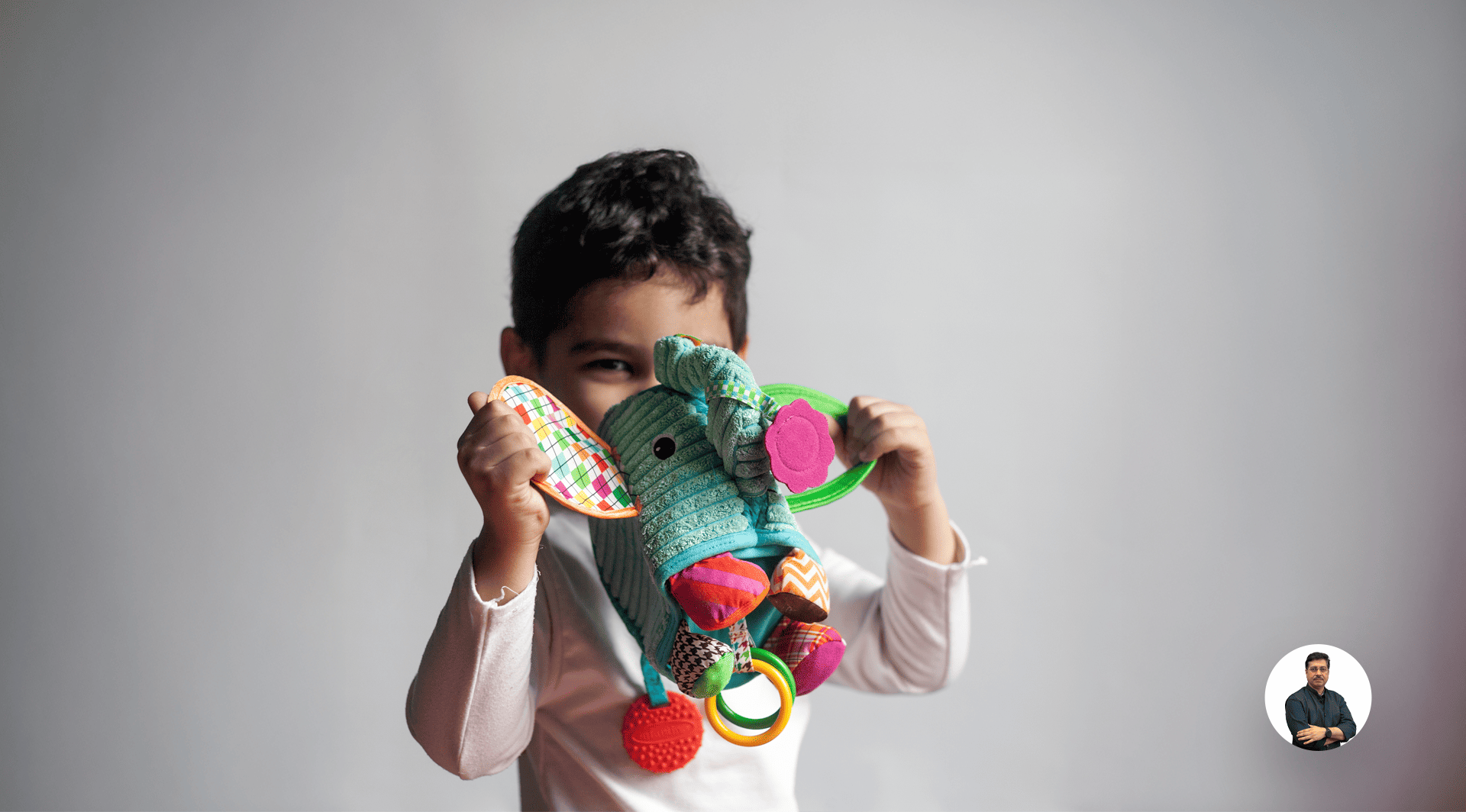
Children with Autism often show repetitive or fixed behaviors such as spinning objects, watching wheels rotate, clapping hands repeatedly, or holding the same item for long periods. These behaviors are called stereotypical behaviors or self-stimulatory behaviors, commonly referred to as stimming.
Such actions may seem unusual to others but for the child, they serve an important internal purpose. These behaviors help the child self-regulate, seek sensory comfort, or cope with overwhelming environments.
Why Do These Behaviours Occur?
In Autism Spectrum Disorder, the brain processes sensory information differently. Everyday stimuli like light, sound, or texture can feel too intense or too dull. To manage these sensations, children may repeat certain actions that either calm them or provide stimulation. For example:
- A child may flap hands when excited or anxious.
- Another may hum or repeat words to block out overwhelming noise.
- Some may hold specific toys or objects as a way to feel secure.
These actions are not meaningless; they reflect the child’s way of coping with how their brain experiences the world.
Should Parents Try to Stop It?
Stopping these behaviors abruptly or taking away the child’s object can lead to distress, frustration, or aggression. These behaviours are often soothing mechanisms, and removing them without support can make the child feel unsafe.
Instead, therapists recommend a gradual and structured approach:
- Observe the Pattern – Identify when and why the behaviour happens. Is it during anxiety, boredom, or sensory overload?
- Avoid Punishment – Correcting or scolding does not reduce repetitive behaviour. It may increase stress.
- Introduce Alternative Engagements – Provide meaningful, sensory-based activities that fulfil the same need (e.g., squeezing a stress ball, drawing, or structured play).
- Encourage Constructive Replacement – Gradually redirect the behaviour toward an activity that supports learning or interaction.
Clinical Approach and Management
Therapists often use techniques from Occupational Therapy and Behaviour Therapy to address repetitive behaviours. For example:
- Sensory Integration Therapy helps regulate the child’s response to sensory inputs.
- Applied Behaviour Analysis (ABA) uses reinforcement to encourage adaptive alternatives.
- Structured Scheduling and Predictability reduce anxiety, which in turn decreases repetitive behaviour.
Over time, when children experience safety, structure, and emotional regulation, the frequency and intensity of these behaviours naturally reduce.
Key Message for Parents
Fixation or repetitive behaviour is not a “bad habit.” It is a form of communication and self-regulation. Each child is unique, and their behaviour provides clues about what they are feeling or needing. Parents should aim to understand the purpose behind the behaviour rather than just stopping it. With consistent therapy, structured routines, and supportive guidance, these behaviours gradually lessen, allowing the child to engage in more purposeful interactions.
Conclusion
Fixation and repetitive behaviours in Autism are part of the child’s effort to manage their sensory and emotional world. Recognising them as communication rather than defiance helps caregivers respond with empathy instead of frustration. Through therapeutic guidance, environmental adjustments, and patient observation, these behaviours can be redirected over time, leading to better regulation, improved attention, and overall development.
This article is for educational purposes. For better accuracy, consult a Child psychologist or Autism Expert
Regards
Dr. Atul Madaan (Autism Expert)
MAAP, MBA, MPhil (Clin. Psy), PhD (Psy)
Operational Head & Clinical Psychologist- Care For Autism (CFA)
+91 8383 84 9217
www.autismspecialist.co.in
𝐂𝐀𝐑𝐄 𝐅𝐎𝐑 𝐀𝐔𝐓𝐈𝐒𝐌 (CFA)
One-of-a-Kind Assessment & Remedial Training Centre for Special-needs Children.
📌 Ludhiana : 114, Green Field, Kochar Market Road, Near National Lab, +91 9646 44 3200
📌 Jalandhar : Hoshiarpur Road, Mubarkpur Shekhein Under Bridge, Near Railway Crossing, +91 9779 72 5400
Looking for expert Autism treatment in Ludhiana and Jalandhar? At Care For Autism Dr. Atul Madaan and his team provide specialized therapies to support children with autism and developmental challenges. Our services include speech therapy, occupational therapy, child behavioral therapy, and ABA therapy for autism in a nurturing environment.
We offer psychological assessments, all type of remedial intervention. Our parent training programs empower parents and families with essential skills. If you’re searching for the best psychologist in Ludhiana, Jalandhar and Punjab, child speech therapy, or a child development center, we are here to help!
Visit our centres in Ludhiana and Jalandhar for autism therapy, parental training, and educational assessments. Give your child the best support with expert care.
Contact
Ludhiana
114, Green Field, Kochar Market Road, Near National Lab, Ludhiana (Punjab), India +91 96464 43200
Jalandhar
Hoshiarpur Road, Sheikhen Pind (Under Bridge), Near Railway Crossing, Jalandhar (Punjab), India +91 97797 25400
'/%3e%3cpath%20fill-rule='evenodd'%20clip-rule='evenodd'%20d='M287.13%20140.32C287.13%20217.32%20224.21%20279.76%20146.6%20279.76C121.95%20279.76%2098.7999%20273.47%2078.6699%20262.41L0.859863%20287.14L26.2199%20212.33C13.4199%20191.31%206.05986%20166.67%206.05986%20140.33C6.05986%2063.3099%2068.9799%200.879883%20146.6%200.879883C224.22%200.879883%20287.13%2063.3099%20287.13%20140.33V140.32ZM146.61%2023.0799C81.4399%2023.0799%2028.4499%2075.6699%2028.4499%20140.32C28.4499%20165.96%2036.7999%20189.72%2050.9499%20209.06L36.1999%20252.59L81.5999%20238.17C100.25%20250.41%20122.6%20257.55%20146.61%20257.55C211.75%20257.55%20264.76%20204.96%20264.76%20140.32C264.76%2075.6799%20211.75%2023.0799%20146.61%2023.0799ZM217.57%20172.44C216.7%20171.01%20214.4%20170.16%20210.97%20168.45C207.52%20166.74%20190.58%20158.47%20187.42%20157.33C184.27%20156.19%20181.95%20155.62%20179.67%20159.04C177.37%20162.46%20170.77%20170.16%20168.75%20172.44C166.75%20174.73%20164.74%20175%20161.3%20173.29C157.85%20171.58%20146.74%20167.96%20133.59%20156.33C123.36%20147.26%20116.44%20136.08%20114.42%20132.66C112.42%20129.24%20114.22%20127.4%20115.93%20125.69C117.48%20124.15%20119.38%20121.7%20121.1%20119.71C122.83%20117.71%20123.4%20116.27%20124.55%20113.99C125.7%20111.71%20125.13%20109.72%20124.26%20108.01C123.41%20106.3%20116.51%2089.4799%20113.64%2082.6299C110.79%2075.7999%20107.91%2076.0499%20105.89%2076.0499C103.87%2076.0499%20100.17%2076.6499%20100.17%2076.6499C100.17%2076.6499%2093.2599%2077.4999%2090.1099%2080.9199C86.9599%2084.3399%2078.0599%2092.6099%2078.0599%20109.42C78.0599%20126.23%2090.3899%20142.5%2092.1199%20144.77C93.8499%20147.06%20115.94%20182.7%20150.97%20196.38C185.99%20210.06%20185.99%20205.5%20192.31%20204.92C198.62%20204.36%20212.69%20196.66%20215.56%20188.67C218.43%20180.69%20218.43%20173.84%20217.58%20172.42L217.57%20172.44Z'%20fill='white'/%3e%3cdefs%3e%3clinearGradient%20id='paint0_linear_48_194'%20x1='147.32'%20y1='18.3098'%20x2='147.32'%20y2='264.42'%20gradientUnits='userSpaceOnUse'%3e%3cstop%20stop-color='%234AC14B'/%3e%3cstop%20offset='1'%20stop-color='%2306853A'/%3e%3c/linearGradient%3e%3c/defs%3e%3c/svg%3e)